My son understood the premise immediately.
“I don’t like that feeling about being out in the open alone.”
Neither do I, not really.
The difference is that he instinctively recoiled from that feeling. I couldn’t stop feeling it.
And I haven’t stopped thinking about I Who Have Never Known Men since I read it. Like many, it affected me deeply and I’m still trying to understand my own reaction to it.
Why did this story get under my skin?
Why this one?
And eventually,
What am I searching for when I read?
Why do I feel compelled to write what I do after certain books?
While I don’t have all the answers yet, somewhere in here reveals why I started this reading room in the first place.
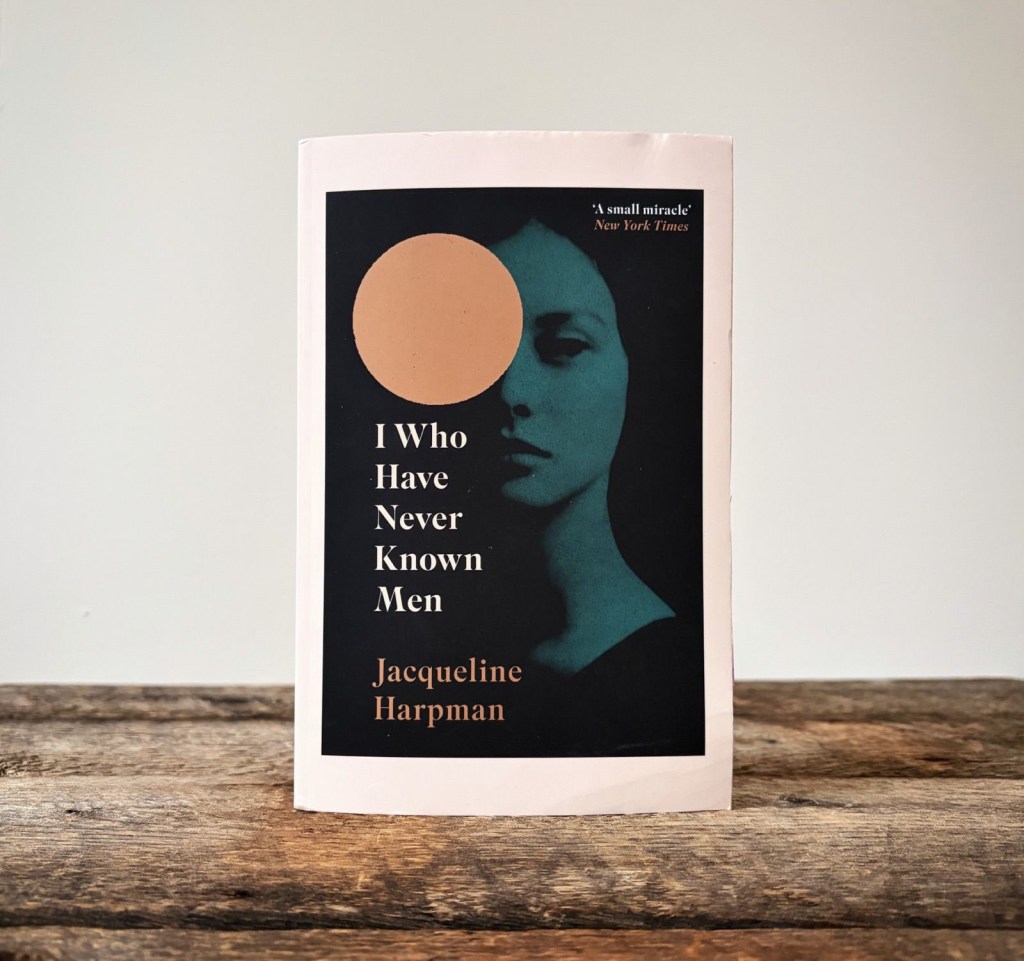
I love spending time thinking about language, meaning, grief, authorship and identity. Those inquiries send me in all kinds of different directions. But the more I read, the more I notice they are all underpinned by the same deeper curiosity: How does literature become a place where I discover who I am?
This book didn’t answer that question solely, or specifically. But it helped me notice the same question I’ve been moving towards this year. Not the same answer. The same question.
What does it mean to be registered?
I don’t mean remembered or admired. I don’t even think I mean loved. And certainly not just “seen”. Maybe I’m not even sure it’s about being known.
I genuinely mean I want to be encountered. To know that my life crossed an impossible distance and left an imprint in another mind and body. And that other consciousness encountered mine.
To know that when this is said,
I am here.
someone answers back,
I know. I feel you.
… and I was sometimes acutely aware that I was alone, and always would be, and that the only pleasure within my grasp was the all-too-rare one of curiosity.
I think that’s why books matter so much to me. Over the past year, both my reading and my personal life have shifted. I still care about stories, but I find myself paying just as much attention to the experience of meeting them. Even a single sentence, written decades ago, can charge me, release me, or arrest me entirely. And there is something deeply reassuring about that, because, for a moment, the distance collapses:
Someone else has stood where I’m standing.
Someone else has felt this.
Someone else has followed this question before me.
I annotate and underline a lot now. I never used to. It’s not to collect beautiful sentences. I’m trying to mark the moment something stirred, the moment a feeling surfaced, because those passages become evidence that the encounter happened.
Writing too has become my way of answering back. Any notion of a review in the transactional, classical sense is long gone. Building shelves of reading experiences in this little room helps me preserve the places where I felt my own mind and body meet another’s.
And I have this need to collect proof that something happened here.
Perhaps, proof that I happened here.
I am an old woman, but I still love looking at my face. I don’t know if it’s beautiful or ugly, but it is the only human face I ever see. I smile at it and receive a friendly smile back.
Reading Harpman’s novel, I found myself trying to imagine a life without exchange. Not simply a life without relationships, but a life without the ordinary friction of being shaped by other people. No real conversation. No shared memories. No opportunity to place yourself beside another person and discover who you are by contrast, by recognition, by response.
We have a phrase for what people seem to want now.
“I see you.”
It’s everywhere and somewhere along the way, it stopped feeling sufficient to me. Or hollow.
It’s kind language. I respect it. But it doesn’t reach the thing I’m trying to describe.
The thing I noticed in this book:
The narrator isn’t simply unseen.
She’s unwitnessed.
That distinction was huge for me.
Because aren’t we constantly being altered by what we encounter? Family. Friends. Work. Books. The people who stayed. The people who left. Even rejection leaves something behind. Even rejection changes us. Even rejection is a kind of encounter.
The narrator has almost none of that. She observes. She endures. She continues. As though existence itself were enough.
Closing the book felt like being dropped into open air.
Because I was partly frightened by its beauty, by Harpman’s ability, to expose how much of myself has been formed through the simple fact of being encountered by other people.
Perhaps you never have time when you are alone? You only acquire it by watching it go by in others.
Let’s take something simple. Relatable I think. What I want is for someone to understand why I chase sunsets.
Not the photograph afterward, because that can be seen.
Not my name attached to it, because that can be remembered.
Not as a fact about me, because that can be known.
I mean the feelings before, during, after any of that.
The electricity that starts building in my body. The sudden urgency to get outside because something beautiful is about to happen. The wave of excitement, vulnerability and apprehension over sharing it with someone else. The strange relief that settles me back into steady once it’s over. Why any of this happens and why it matters. It’s a life. One life. My life.
That’s the part I wish could somehow be encountered. And then registered.
It’s the same reason I want someone to understand why a single passage in a novel can stay with me for months. Why language can rearrange the course of an afternoon, a night, or days.
Why I still return to my essay on The Iliad, sometimes daily, definitely weekly, as though I’m checking in on a version of myself I met there.
Why Clarice Lispector can do something to me that I still don’t have the language to describe.
Why books end up open on tables, floors, my desk and nightstand, as though they’re still participating in the life around me.
I discovered physical solitude, something so ordinary for all others, but which I had never experienced. It immediately appealed to me.
And if I’m being honest, this all goes way deeper than books.
I think what I really want is for someone to recognize the parts of me that feel most alive.
The part that falls in love with ideas.
The part that wants to delight in another’s mind, for someone to delight in mine.
The part that aches for intimacy.
The part that responds to touch, affection, desire, language, atmosphere.
The part that feels everything at full volume.
Nothing here is really remarkable. It’s all just me and the particular shape my aliveness has taken. And I don’t want those intimate parts to disappear without having touched another life. I want them to have landed somewhere.
I was forced to acknowledge too late, much too late, that I too had loved, that I was capable of suffering, and that I was human after all.
Maybe that’s what being registered means to me. It’s more than acknowledging that I exist. It’s more than having someone know me completely.
Just knowing that some part of my inner life crossed the distance into someone else’s.
That something true about what it feels like to be me landed there.
I think that’s what Harpman’s novel left me with.
Not the question of whether a life can exist without witness.
Clearly it can.
Her narrator proves that.
The question is:
What becomes of the parts of us that long to encounter another consciousness?
Maybe it’s actually about how those parts come alive through response and recognition, or through the simple fact that someone else met them. Yes, we are looping here. I do that. A lot.
It’s certainly becoming clearer why this reading room exists as a place to preserve encounters with books. A small act of registration. The evidence that, for a brief moment, two consciousnesses met across impossible distances.
And yes, it’s a hope that somewhere beyond these shelves, another consciousness answers back.
I know.
I feel you.
I am registered.
 robyn reads books
Leave a comment