It would be easy to call Madonna in a Fur Coat by Sabahattin Ali a story about unrequited love.
Longing.
Misalignment.
And maybe it is.
It reads as depth and intensity on the page… but why? Distance? Restraint? Everything just slightly out of reach? Simply a mismatch?
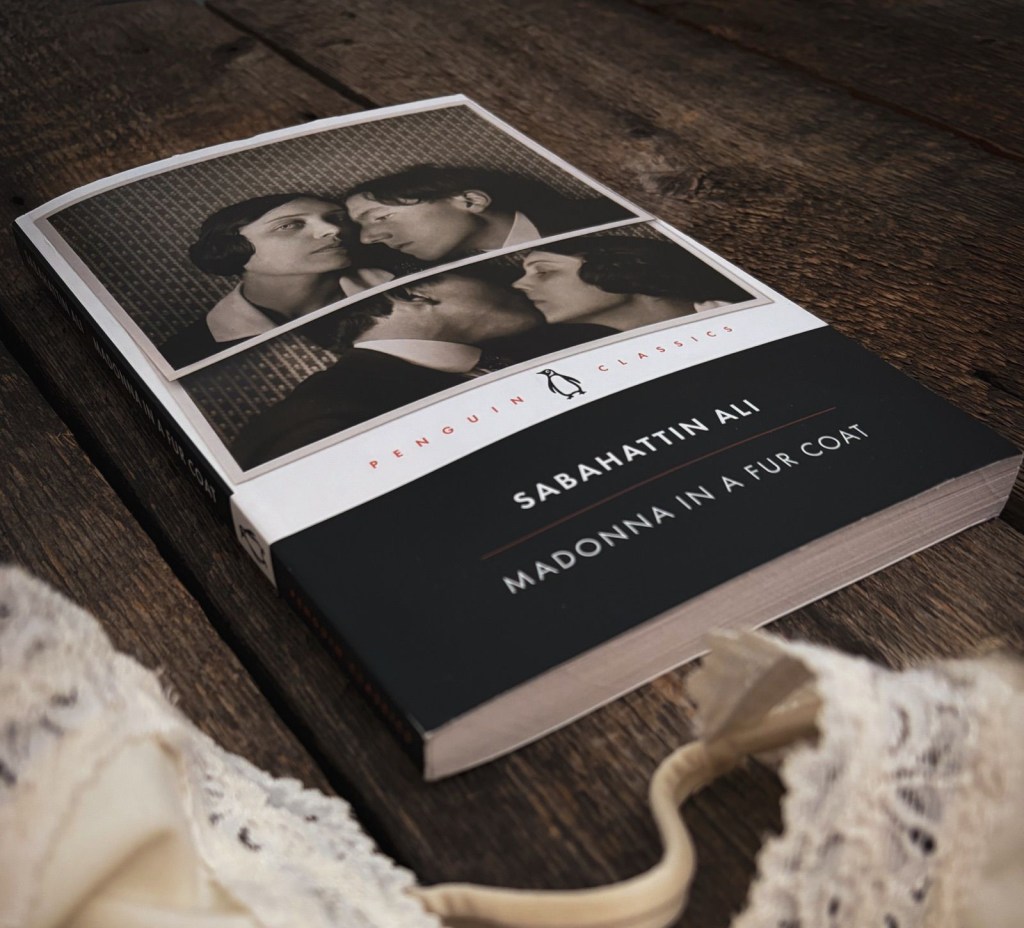
Can there be another soul wandering this great globe who is lonely as I? Who would hear me out? Where would I begin?
When you’re in the middle of a connection ending, books like these have a strong likelihood of reading like testimony rather than literature, at least in my experience. Very quickly, and without any safety checks on your self-awareness, a fictional story can become a sworn courtroom statement about your own life.
Since the beginning of the year, I’ve become more curious about how quickly we map ourselves onto a narrative, how easily we fill in the gaps with something that feels personal, meaningful… mirrored. And how deliberately some stories are built to invite that projection.
I do it. I get emotionally invested in books, likely to a fault. Sometimes at a cost to my own equilibrium. My mind naturally fills those spaces using my own emotional landscape. That’s part of what makes literature feel alive to me. My guess is some of you are like this too. Gosh, I can’t be the only one?
And the best authors know exactly how to build for that.
An aesthetic of longing. Romanticized distance. Unfulfilled connection. The sense that something profound is just beyond reach.
Some writers create worlds that are merely convincing; others create ones that feel deeply personal. They preserve all the intensity and nuance of an emotion and then hand the reader an invitation to step inside.
For me, that’s where it gets a little dangerous. (Yes, indeed I am a woman of danger.) I RSVP’d and jumped feet first into this one without hesitation.
My “therapeutic reckoning” was realizing I had mistaken a story for something more than it is.
If the relationship ends in total, catastrophic ruin, as it does in Madonna in a Fur Coat, you can start treating that ending as prophecy. Like forecasted weather for the truth of your own life. Thankfully, long-range forecasts are usually bogus, and I can handle a few stormy days (or weeks, perhaps months) without a raincoat or umbrella.
So what does that really do? Is this helpful or hurtful in how we recalibrate an emotional trajectory life has put us on? Why is it dangerous? For me, I’ve learned (over a decent amount of time) that it simply robs you of agency.
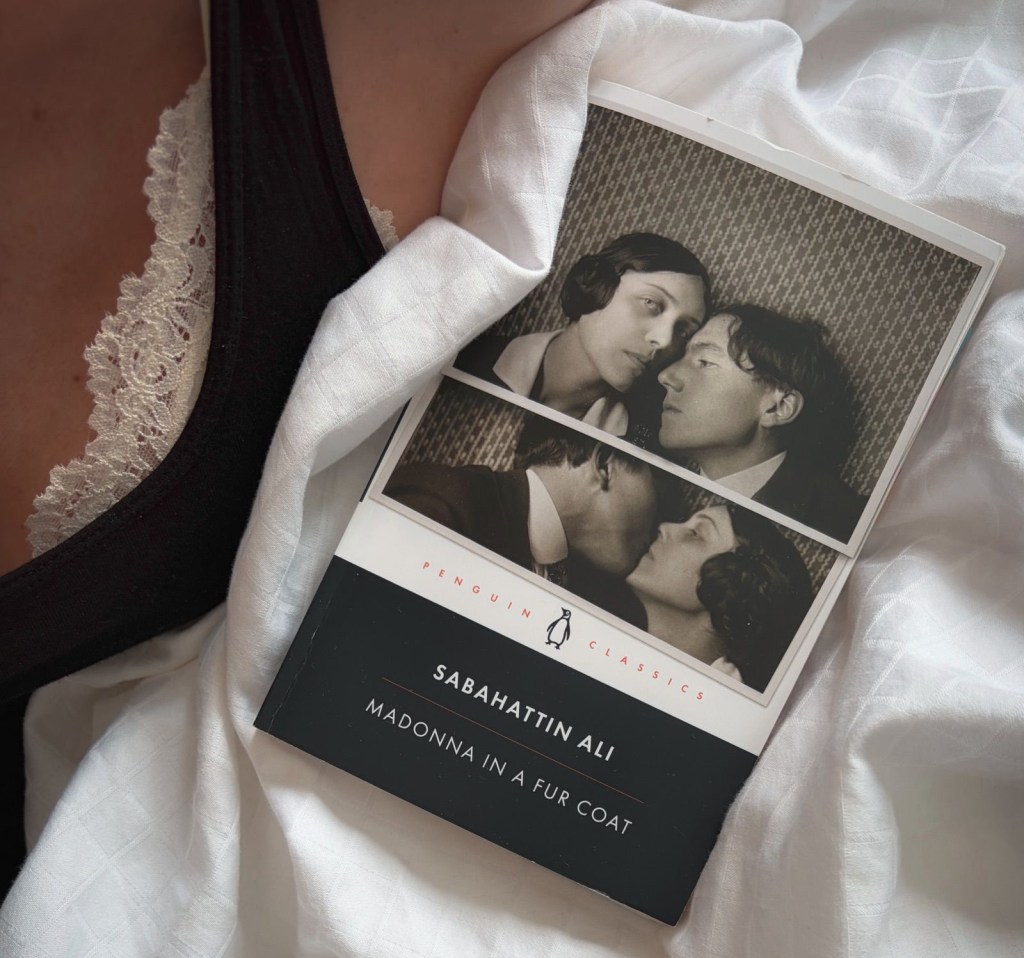
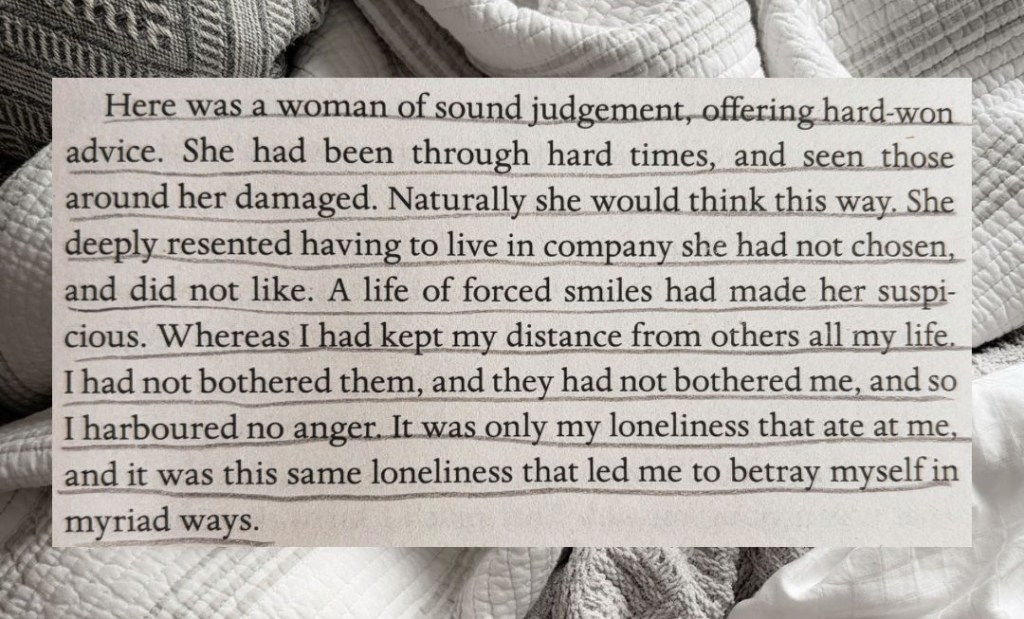
So yes, this is a beautiful work of literary fiction. It’s also one of the most quotable books I’ve ever experienced.
Then one day, it all came to an end . . . It was that simple, it ended so abruptly that I failed to grasp the enormity of what had happened . . . I was only a little surprised, but deeply saddened; and I would never have thought that such an event would leave such a great and lasting effect on me.
I think that line lands hardest when you’re not only grieving a person, but grieving the possibility they seemed to represent. The feeling that finally, someone sees me. Or finally, here is somewhere for all this love and attention and tenderness to go.
When that ends, the loneliness can feel much larger than the actual friendship or relationship. But that’s a whole other post to come.
And so that’s all I want to unpack here.
I’ll come back to this book another time. Perhaps during a different season of life, through a different lens.
 robyn reads books
Leave a comment