On desire and the need to understand ourselves
Do your desires reveal something true about you? Are they impulses you wrap up in philosophy, romance, meaning? Maybe you act on them to feel free… or to feel something. Or because life is short. Perhaps it’s love, can you tell the difference?

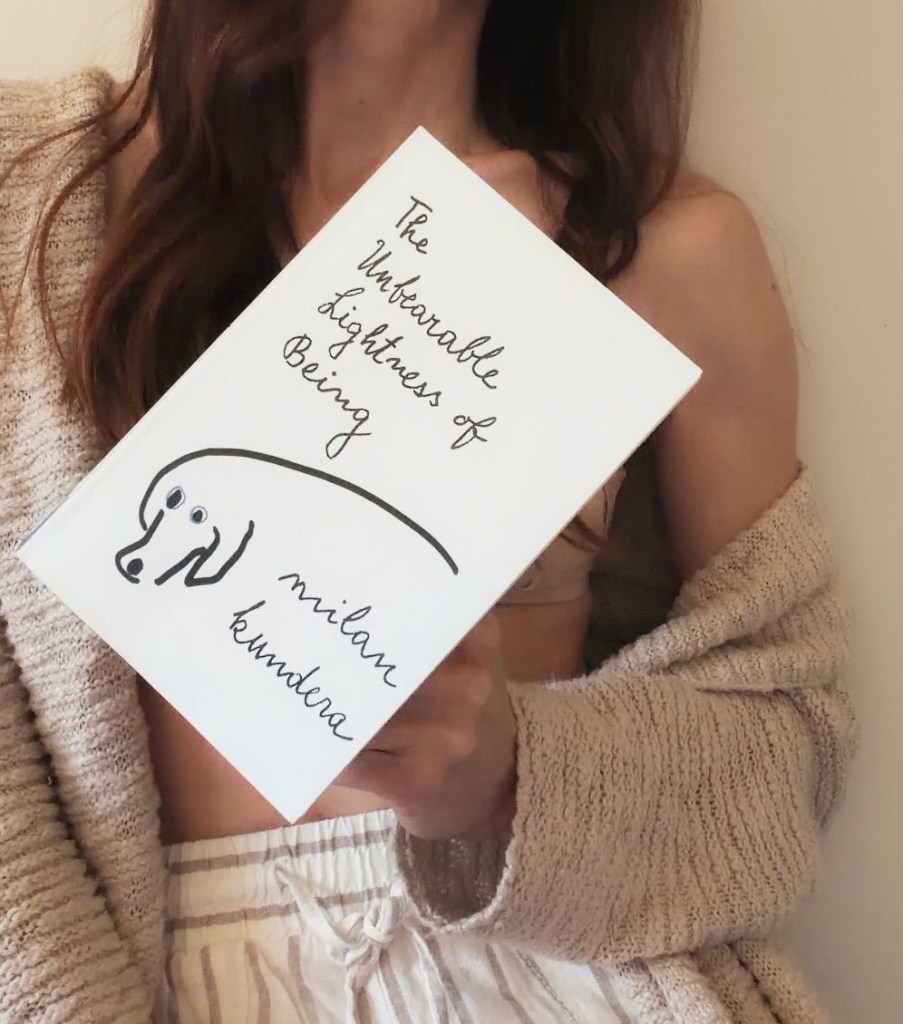
The Unbearable Lightness of Being totally possessed me and left me vaguely seduced by existentialism.
The book felt slippery. Storylines emerge and disappear. Reflections interrupt the narrative constantly. Not sure if it’s simply Kundera’s style but everything he was doing here had me… charged. And maybe the current was already vibing before I picked this up but we’ll get to that in a bit.
Kundera understands how contradictory people really are, how we’re pulled between opposing desires all the time. Through Tomas, Tereza, Sabina, Franz and the shifting intimacies between them, he moves through friendship, love, infidelity, politics, jealousy, freedom and attachment. They contradict themselves constantly, and they know it, feel it.
Some people want intimacy but resist being fully held by another. Some want freedom until it merges with loneliness. Some desire deep connection while remaining fundamentally separate from the other.
One painful undercurrent is the difficulty of perception. Everyone is trying to understand themselves while being misunderstood by people closest to them. Trying to love each other through layers of fantasy, interpretation, affairs and imagined versions of one another. Kundera even manages to make compassion feel complicated and heavy.
For some, being misunderstood matters terribly. Others carry it lightly.
I ached for Tereza the most after reading, and Tomas was certainly familiar up close. Kundera gives her existential weight, in a world obsessed with lightness. She longs for intimacy that feels stable and meaningful while existing beside people unable to live that way.
So the storied sex life? It matters here. Although the sexual energy in this novel is electric, it’s fully controlled by Kundera. There’s no shock value at play. Desire just becomes another way the characters try to understand themselves and fail each other in the process.
What a wildly alive study in contradiction and the human condition.

On reading beyond my reach
One of the pleasures of reading a novel this ambitious is realizing how much remains beyond my grasp. There was an abundance of threads here. So while I was occupied by desire, contradiction, intimacy, perception, longing, being seen… Nietzsche, eternal return, kitsch, politics and aesthetics were all happening in some adjacent room I didn’t have the keys to.
And I just can’t pretend I’m a philosopher. So I know this is all deeply tied to and challenges a lightness/weight philosophy but I’ve been speaking purely from the experience of reading it, feeling it and getting completely tangled up in the contradictions Kundera lays bare.
And I’m still unpacking his thoughts on ‘kitsch’. It’s definitely a concept that requires a second read to fully grasp. A bit too abstract for me as I was focusing my experience elsewhere. But therein lies the beauty of this book – its reread potential seems limitless.
On the intimacy of “You should read…”
Would you agree the circumstances under which a book enters your life is often part of the reading experience itself?
For many, there are books we choose for ourselves, and books that arrive through other people. When I picked up The Unbearable Lightness of Being, it was not possible to separate the novel from the person who recommended it.
For much of it, I found myself reading two texts at once.
Kundera’s, of course, but also my own. The timing of the recommendation, the person, the conversation in which it surfaced, and the emotional atmosphere I was carrying into the book made any attempt at a “clean” reading feel impossible. Certain characters didn’t remain characters for long; that silly mirror got in the way as it usually does.
It’s strange how easily that overlaps with what Kundera is doing here. The same preoccupation I have keeps resurfacing in different forms, in different works: what it means to exist in someone else’s attention, and whether that is what gives a life its weight and meaning.
Also overlapping is how the reader experience can be altered by its point of entry into your life. Similar to how the characters enter one another’s and the circumstances around that. I haven’t been an avid reader for very long. Only in the last few years did reading become a big part of my life. And only recently have I really been given book recs by people who know me well, who say, explicitly, you should read this. That kind of recommendation feels intimate in a way I didn’t expect.
I didn’t know it then when I read this book but I see it now as recognition. Someone saying: This feels like you.
And that actually feels really great.
To be known, even briefly, in the shape of a book or book rec someone places in your hands.
So I wonder: do we remember the recommendation itself, and everything that came attached to it?
I think I will.
I know I will with this one.
 robyn reads books
Leave a comment